Series vs Parallel EQ: Understanding the Difference
What is Parallel EQ Processing?
In parallel EQ architectures, all bands operate independently on the same input signal. Each band reads the original source, makes its adjustments, and outputs its result. These outputs are then summed together to create the final processed signal.
Think of parallel processing like multiple photographers taking pictures of the same scene from different angles, then combining those photos into a single composite image.
The advantage? Maximum transparency and surgical precision. Since bands don't interact, you can make aggressive adjustments to one frequency range without affecting others. This is why parallel EQs dominate modern mixing—they're predictable and clean.
How Series Processing Works
Series-chain EQ processing works fundamentally differently. Band 1 processes the input signal, then passes its output to Band 2. Band 2 processes Band 1's output and passes the result to Band 3, and so on through all 16 bands.
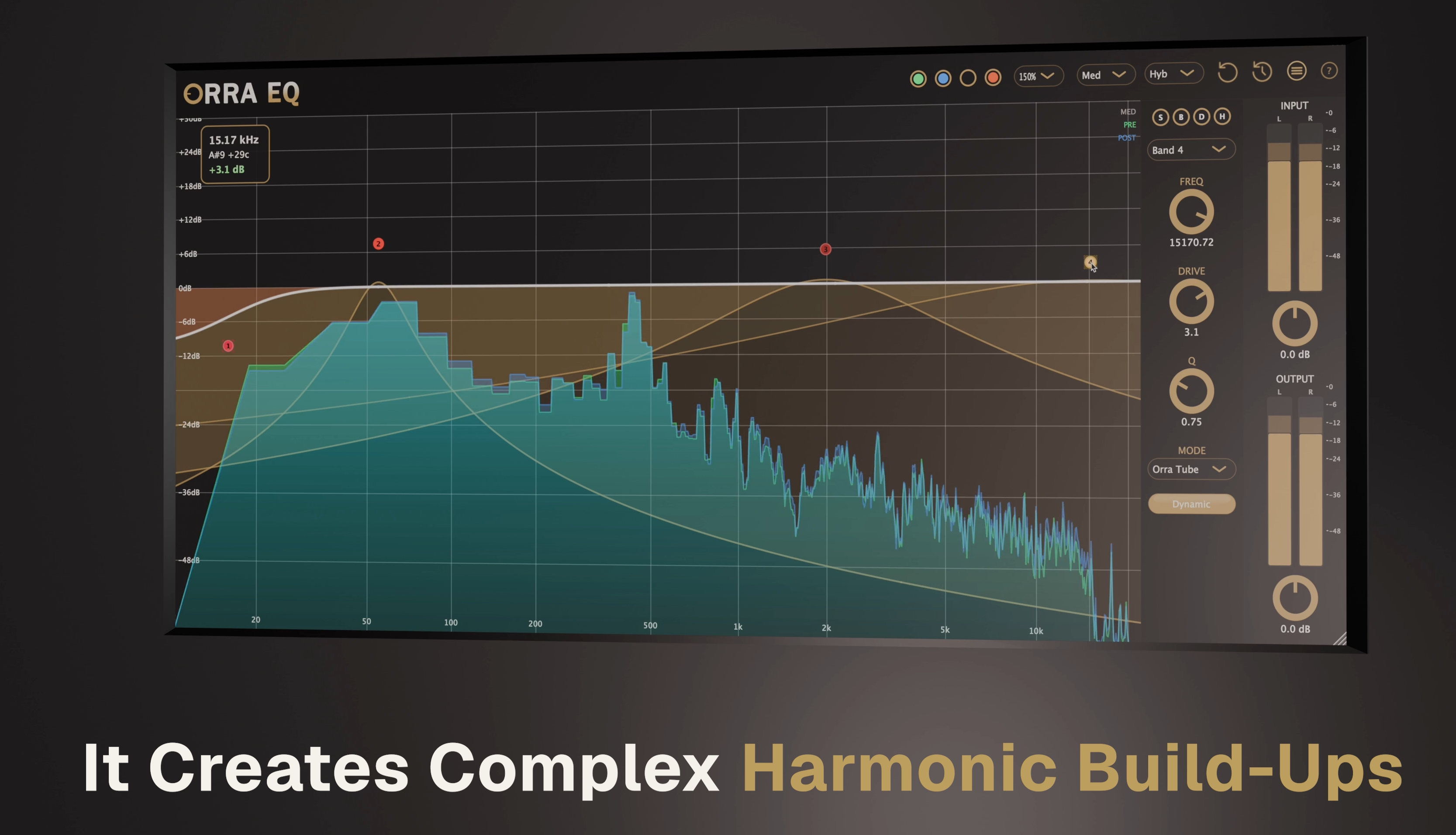
This creates something magical: interaction. When you boost 10kHz in Band 4, then add saturation in Band 5, the saturation is responding to the boosted signal—not the original. Adjustments accumulate and build on each other, creating complex harmonic relationships that parallel processing can't achieve.
Why Analog Gear Uses Series Processing
Classic analog EQs—the Neve 1073, API 550, Pultec EQP-1A—all use series architectures because that's how analog circuits naturally work. Signal flows through one stage, then the next, accumulating character and interaction along the way.
The Analog Advantage
- •Natural harmonic build-up through multiple gain stages
- •Musical saturation that responds to accumulated signal
- •Organic “glue” from stage-to-stage interaction
- •Complex frequency-dependent distortion
This is why engineers still reach for hardware EQs even with pristine digital tools available. The series architecture creates a sonic character that's musically engaging—something that “sounds right” even if it's technically less precise.
Orra EQ's Series Implementation
Orra EQ brings this analog series-chain behavior into the digital domain. Each of the 16 bands processes the previous band's output, with saturation stages that respond to the accumulated signal.
This means when you boost highs in Band 6, add Orra Tube saturation in Band 7, and apply gentle compression in Band 8, you're creating a cascade of interactions that parallel EQs simply can't replicate. The saturation responds to the boosted signal. The compression works on the saturated, boosted material.
Because bands process sequentially, saturation in earlier bands affects everything downstream. Multiple saturation types can be stacked for complex, evolving harmonic content that builds as the signal passes through the chain.